

This article helps you determine what to look for in a high-value-for money phone so that you can choose the right value-packed smartphone.
Best smartphones under ₹50,000 in India
If you are shopping under ₹50,000 in India, the best phone is the one that balances performance, display quality, battery life, software support, and long-term usability. This article helps you determine what to look for in a high-value-for-money phone so that you can choose the right value-packed smartphone.
What should you look for in smartphones under ₹50,000?
When you are shopping for a phone under ₹50,000, you should focus on four core areas: performance, camera, battery and long‑term software support.
- Performance: At this price, you should expect a modern 5G chipset, smooth multitasking and at least 8GB RAM with fast UFS storage.
- Display: A 120Hz AMOLED display with good brightness and colour accuracy is now standard for this bracket.
- Camera: Look for a high‑resolution main sensor with optical image stabilisation, a usable telephoto lens, and a front camera that can handle Instagram-ready selfies.
- Battery and charging: Anything around 5000mAh used to be good, but newer phones now push much higher capacities with fast charging, so you can comfortably get through a full day or more on a single charge.
For Indian buyers, portrait and selfie performance in everyday use, especially accurate reproduction of Indian skin tones, often matters more than megapixel counts alone. This is where newer AI‑driven camera systems start to pull ahead of traditional spec‑heavy flagships.
OPPO vs vivo: comparing different phones under ₹50,000
| Spec/feature | OPPO Reno16c 5G | vivo V30e 5G |
| Price segment | ₹46,999 | ₹32,999 |
| Chipset | MediaTek Dimensity 7300‑Energy | Qualcomm Snapdragon 6 Gen 1 |
| Display | 6.57‑inch AMOLED FHD+ (2372×1080), 120Hz, 10‑bit, 1400 nits. | 6.78‑inch AMOLED FHD+ (2400×1080), 120Hz, up to 1300 nits peak. |
| Rear cameras | Triple: 50MP main (OIS) + 50MP 3.5x telephoto (OIS, up to 60x digital) + 8MP ultra‑wide (116°). | Dual: 50MP main (OIS, 79°) + 8MP ultra‑wide (120°). |
| Front camera | 50MP Ultra Wide Selfie Camera (100° FOV, f2.0). | 50MP Eye AF front camera (82° FOV, f2.45). |
| Battery | 7000mAh, designed for multi-day endurance | 5500mAh, strong for mid‑range. |
| Charging | 80W SUPERVOOC fast charging via USB‑C. | 44W fast charging via vivo standard charger. |
| Durability | IP66 / IP68 / IP69 / IP69K water and dust resistance. | IP64 splash‑proof, dust and splash protection. |
| OS | ColorOS 16 (Android 16) with AI tools like AI Bill Manager, AI Mind Pilot, AI Extract, etc. | Funtouch OS 14 (Android 14) with vivo’s camera and UI features. |
| Portrait / AI story | Centrepiece is Trend‑Setting AI Portrait Camera with Natural Tone Imaging – Made for every Indian Face, 3.5x Telephoto Vibe Portrait, 50MP Ultra Wide Selfie, and in‑camera social tools like AI Remix Collage (static on Reno16c 5G), Pop Cam, Popout 2.0, Dual‑View Video 2.0, 4K Auto Straighten Video. | Focused on hardware‑driven portraits and selfies with 50MP main + 50MP Eye AF front, plus modes such as Night, Portrait, Dual View and Micro Movie; tuned as a stylish camera phone rather than explicitly India‑skin‑tone AI narrative. |
Why OPPO Reno16c 5G is the stronger choice here
When you look beyond pricing and focus on specifications, features, and long-term usability, the OPPO Reno16c 5G becomes the more attractive option compared to a mid-range device like the vivo V30e.
More powerful hardware
OPPO Reno16c 5G is built around a newer, efficiency‑focused 4nm platform (MediaTek Dimensity 7300‑Energy) paired with faster UFS 3.1 storage and up to 12GB RAM, while vivo V30e stays in a more typical mid‑range zone with Snapdragon 6 Gen 1 and UFS 2.2. As a result, Reno16c 5G delivers faster app launches, smoother multitasking, and better long-term usability for future Android and ColorOS updates, especially if you shoot a lot of 4K video or run multiple social apps at once.
Display and durability
Both phones offer 120Hz AMOLED displays, but Reno16c 5G has the edge in both brightness and durability. The 6.57‑inch FHD+ panel is 10‑bit, supports OPPO’s Smart Adaptive Screen, and can reach higher practical brightness levels, which improves visibility under India’s harsh sunlight conditions. The Vivo’s 6.78‑inch curved AMOLED looks premium, but the curve can be more fragile and less convenient for accidental touch rejection.
Durability is another area where OPPO pulls ahead. Reno16c 5G has an unusually comprehensive IP66/IP68/IP69/IP69K protection package, meaning it is far more resilient to dust, splashes, heavy rain, and the kind of accidental exposure during the monsoon season. Vivo V30e’s IP64 splash‑proof rating is decent for its price, but it is not in the same league as Reno16c 5G’s multi‑layer protection.
More versatile camera system for portraits and zoom
On the rear, OPPO Reno16c 5G carries a complete triple‑camera setup: 50MP Ultra‑Clear main sensor with optical stabilisation, a dedicated 50MP 3.5x telephoto with OIS, and an 8MP ultra‑wide lens. Vivo V30e sticks to a dual‑camera configuration of 50MP main and 8MP ultra‑wide, with no true optical telephoto.
In day-to-day use, the dedicated 3.5x optical telephoto lens enables improved portrait compression, cleaner background separation and more usable zoom for travel photography and everyday moments compared to purely digital zoom. When you combine this with the Ultra‑Clear main sensor’s stabilisation, OPPO can deliver more consistent results for everyday portraits, low‑light snaps and long‑range composition.
Battery, charging and everyday endurance
Battery life and charging performance are areas where Reno16c 5G enjoys a clear advantage over the vivo V30e. OPPO equips the device with a massive 7000mAh battery and 80W SUPERVOOC charging, while V30e offers a still‑good but clearly smaller 5500mAh pack with 44W charging. This lets the former offer a larger battery and faster top‑ups, meaning you are more likely to get multi‑day use for typical daily activities, and even if you drain the battery, 80W SUPERVOOC gets you back to usable levels much faster.
AI‑driven portrait and social‑creation features
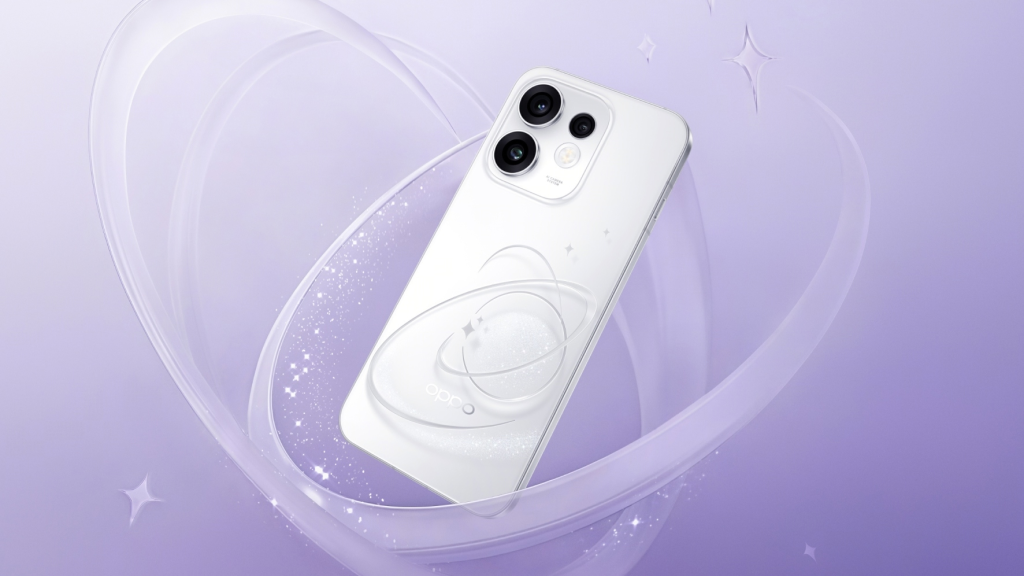
The biggest differentiator is OPPO’s focus on AI-powered portrait photography and content creation for social media designed specifically for Indian users. The model is part of the Reno16 Series positioned as a Trend‑Setting AI Portrait Camera, anchored by features like Natural Tone Imaging, 3.5x Telephoto Vibe Portrait, and a 50MP Ultra-Wide Selfie Camera.
Natural Tone Imaging focuses specifically on rendering Indian skin tones accurately, avoiding the overly fair or oversaturated look common in generic tuning. This means your selfies and portraits look natural during festivals, family gatherings, and everyday social occasions, not just “brightened” faces.
Reno16c 5G integrates one‑tap social tools directly into the camera app: AI Remix Collage (static sticker version on this model), Pop Cam, Popout 2.0, Dual‑View Video and 4K Auto Straighten Video. These modes are designed so that you can create Instagram‑ready posts and Reels without juggling multiple third‑party editing apps. Vivo V30e provides a good set of camera modes for Night, Portrait and Dual View, but it does not centre its narrative around India‑specific AI skin‑tone tuning and in‑camera social workflows to the same degree.